In the production of medical devices, the quality of welded connections can fundamentally influence the reliability and durability of the finished structure. However, in addition to the appropriate welding technology and materials, it is also essential that the person performing the work is skilled. The welder’s professional preparation, experience, and suitability for the specific task all contribute to consistent production quality. This preparation is confirmed by welding qualifications.
What does the welder qualification certify?
The welding qualification certifies that an expert is capable of producing a welded joint of the required quality under specified conditions. The qualification does not confer general authorization for all welding tasks: it is valid for a precisely defined range of applications.
The qualification scope is determined, among other things, by the applied welding process, the type of material, the material thickness and the welding position. Other requirements may apply, such as CO welding and AWI (TIG) welding, while works performed in a horizontal or other spatial position may also require different preparation. The code numbers and classifications included in the certificate indicate under which conditions a specific welder can perform qualified work.
During the certification process, the professional must prepare a sample piece that is examined by an external certification body. After a successful examination, a certificate issued attests the professional’s suitability to perform the specific welding task.
Why is certification important in the general machine industry as well?
In certain industries, such as the manufacture of pressure vessels, nuclear reactors or pipelines, welding qualifications form part of a strict qualification system. However, in general machine engineering and medical technology manufacturing, not all welding tasks require the use of a qualified welder.
The welding qualification system has long been part of Mediagnost’s internal quality assurance practices. Its introduction was motivated by a professional initiative and the aspiration to prove the preparedness of our employees beyond the mandatory requirements and to continuously maintain the conditions for high-quality work.
How does the certification work at Mediagnost?
At the company, we strive to ensure that our welders have valid qualifications for the work processes they most frequently perform. Currently, approximately 90 percent of our welding specialists have such certificates for the welding tasks they regularly perform.
During the qualification process, welders produce test pieces according to specific parameters. The test pieces are examined and approved by an external quality organization. Upon successful passing the exam, the welder receives a certificate that precisely specifies the scope of validity of the qualification and the conditions under which they may perform the specific welding task.
To maintain the validity of the certifications, continuous professional practice is also essential. At Mediagnost, we check and document annually whether the certified welders actually performed the welding activities covered by their certification during the respective period. This ensures that the acquired professional practice is not lost and that the welders continue to have the experience relevant to the given task. The verification is carried out by Zoltán Báder, an expert with the International Welding Technologist (IWT) qualification, in accordance with the relevant standard requirements.
In this, the practical experience and technological knowledge of our leaders also play an important role: professionals manage the production processes who are well acquainted with both the day-to-day production tasks and the professional challenges of each work phase. Thus, they not only understand and evaluate the specifics of welding but also the complexity of the work of the professionals involved in the production. This system allows us to rely not only on the results of a previous successful exam but also to continuously monitor the maintenance of the necessary professional competencies.
Continuous improvement of quality
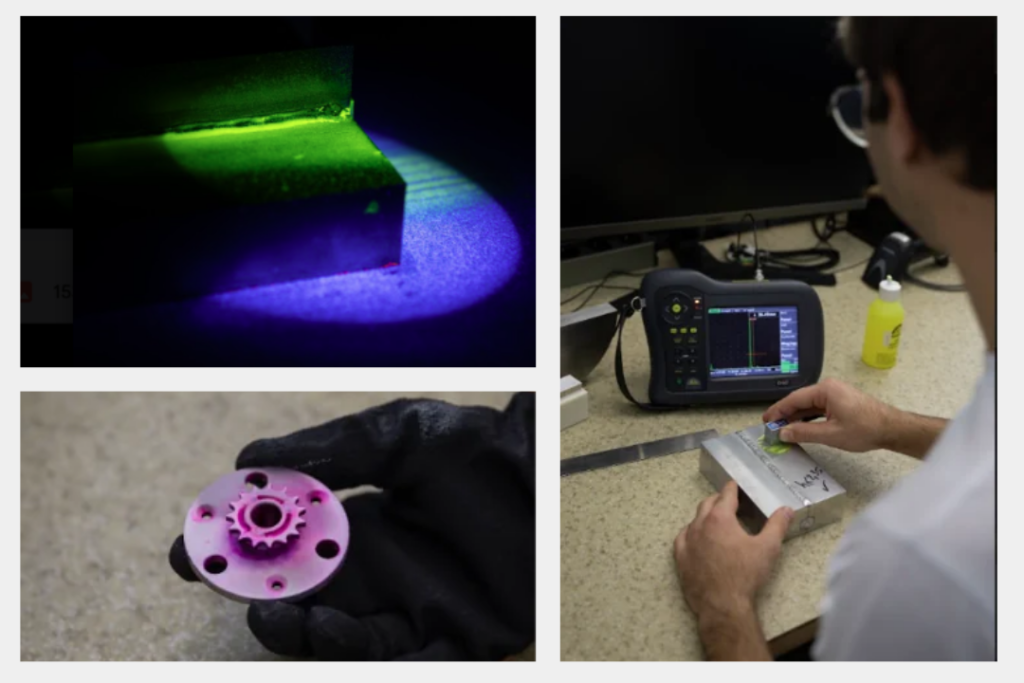
In certifying the conformity of welded joints, in addition to the professional qualification of the expert, the control of the finished welds also plays an important role. Properly trained welders and non-destructive material testing methods together support the control of production quality. While the welder qualification certifies the expert’s ability to perform a specific task, material testing serves to reveal any defects in the finished joints.
Maintaining welding qualifications at Mediagnost and establishing an materials testing laboratory are part of the same approach: we want to continuously develop our own professional competencies and objectively verify the compliance of the production processes. We are convinced that to achieve a reliable end result, not only the appropriate technology but also prepared professionals and consistent quality control are essential.