
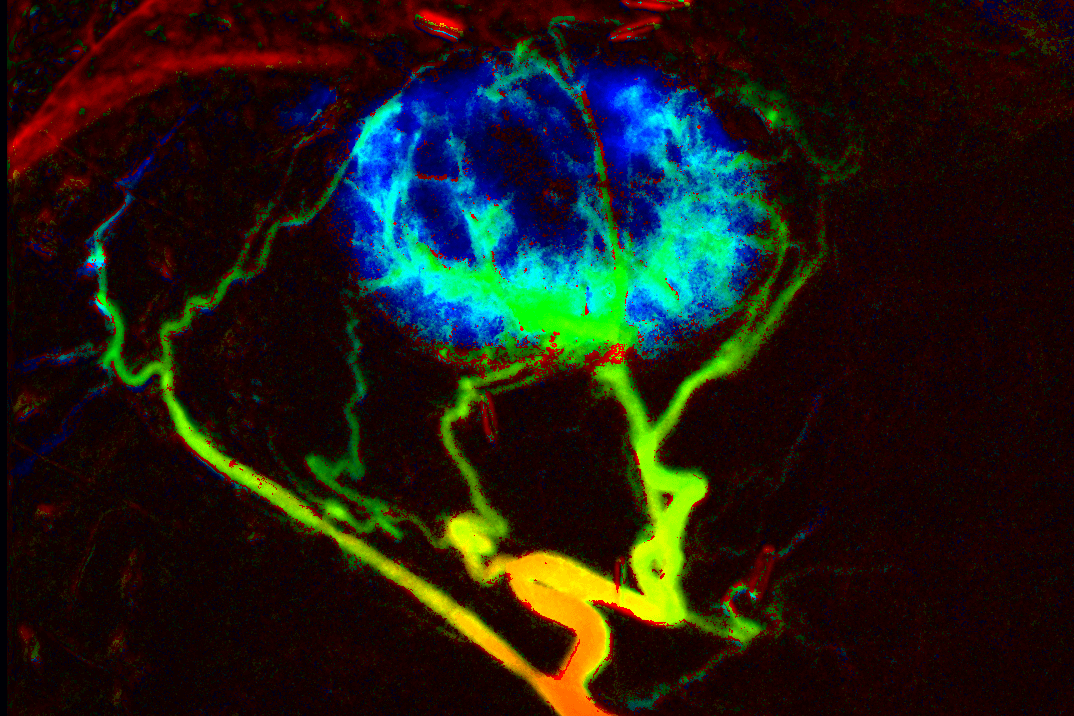
Kinepict Kft is strategic partner of Mediagnost Kft., a start-up company developing innovative technology. Kinepict’s solution is motion-based image processing, which results in better and more detailed images with less X-ray exposure and less contrast agent consumption. This is the result of several years joint work by physicists Dr. Szabolcs Osváth and Dr. Krisztián Szigeti.
The primary application of Kinepict technology is in angiography, where a series of X-ray images are taken of an area while contrast agent is injected into the blood. The Kinepict technology is already being used successfully in several leading hospitals in Hungary and Germany, demonstrating its effectiveness and innovation. The Kinepict software does not analyse the frames of the X-ray angiography image series one by one, but processes the entire dataset with statistical analysis tools reveling movements. The resulting ‘kinetic image’ displays the differences between images in the series, highlighting changes doctors are looking for. The technology is able to isolate anatomical backgrounds, separate changing parts from noise, visualizing diagnostically important elements.
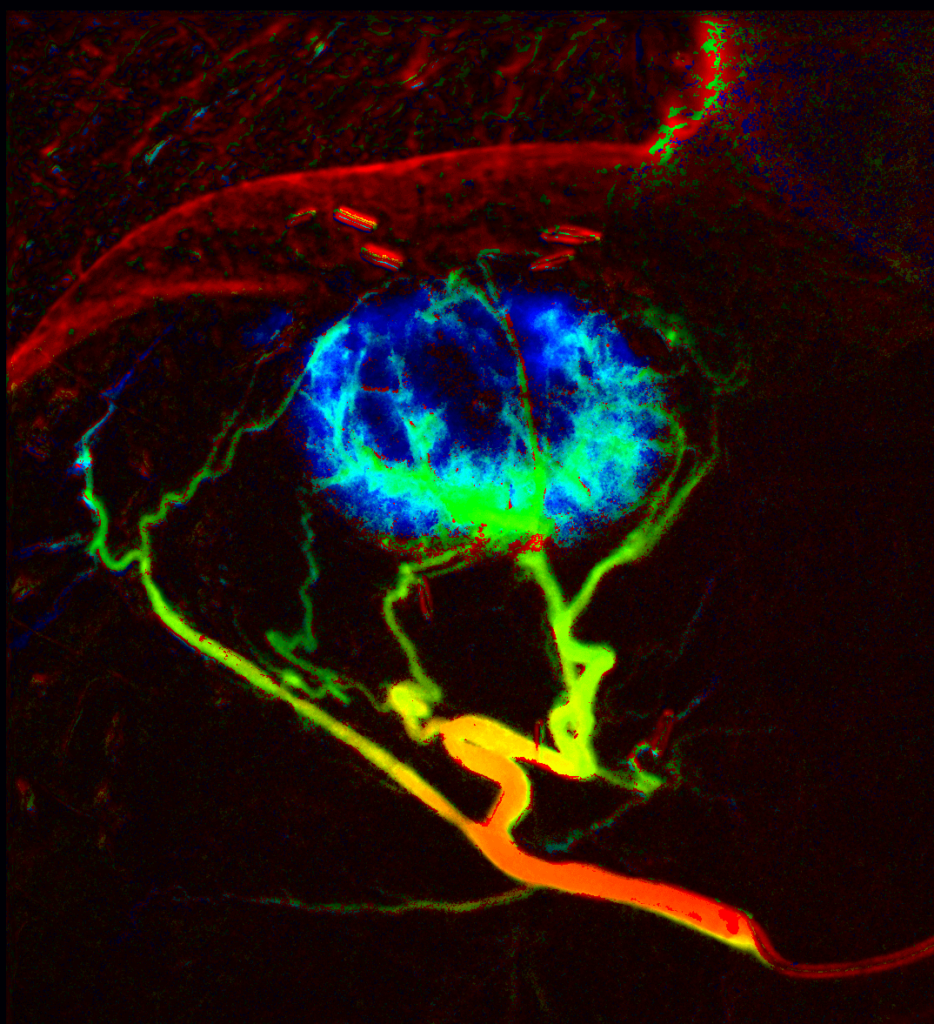
Liver tumor Kinepict DVA picture (courtesy of Prof Thomas Vogl, Uniklinik Frankfurt).
Achieving lower radiation exposure remains a major challenge in medical imaging. Leading medical companies are devoting considerable resources to this, as high doses of radiation are harmful to health. The Kinepict technology is a breakthrough in this area, as it provides excellent image quality of the blood vessels even at low X-ray doses. In addition to that, the amount of contrast material required for imaging can be significantly reduced, as kinetic imaging generates contrast based on movement, revealing the natural differences between moving and stationary parts.


